Showing posts with label Interior Design. Show all posts

Friday, April 22, 2016

5 New Ideas of Kitchen Design

Open to the Life
Model           : CERES I CORE-A
Manufacturer: LEICHT
Photography: © LEICHT Küchen AG

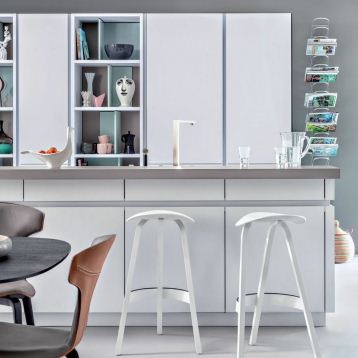
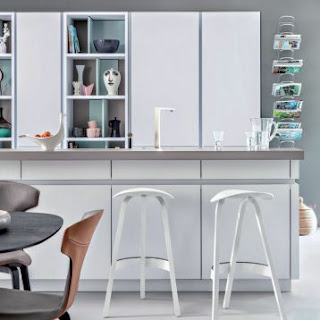
The LEICHT Ceres l Core-A design is a clear example of how contemporary kitchens have lost their traditional  aesthetics  in  order  to  integrate  better  with  the  rest  of  the  home.  Nowadays, kitchen
furniture  does  not  rely  simply  on  doors  and  drawers  as  its  main  components,  but  incorporates attractive shelves on which to display decorative elements that are more commonly associated with a living room than a kitchen.


Architect       : OTD Design & Development
Location        : Malibu, California
Photography  : © OTD Design & Development
If anything stands out in this home it is its privileged location, right on the beachfront in the gorgeous enclave of Malibu in California. This spectacular location drives the whole design of the house and, as you would expect, it also dictates the configuration of the kitchen—it is open and oriented toward the spectacular wooden deck that sits right on the sandy beach.


Industrial Style Evolution
Model             : Code Evolution
Manufacturer : Snaidero
Photography  : © Snaidero
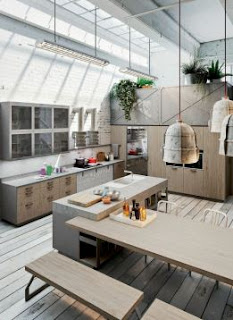
Code Evolution is a kitchen design that recalls a vintage aesthetic, decidedly industrial with touches that  will  appeal  particularly  to  fans  of  Nordic  design.  The  stylish  Snaidero  kitchen  plays  with different  materials,  linking,  combining  and  personalizing  them  with  a  high-quality,  youthful, contemporary look that pays attention to the latest design trends.


The hoods conjure up images of the glow of portside lighthouses and lend an industrial feel to the
design.

Geometric Volumes Combination
Model            : Elle
Manufacturer: Snaidero
Photography: © Snaidero

Snaidero’s Elle design proposes an evolution of the kitchen space: a concept that comes from careful architectural  study  and  finishes  up  with  different  layout  solutions,  characterized  by  a  series  of specific innovative components. This project is distinguished by its remarkable attention to detail, a project of proportions and series of planes that re-create the kitchen with originality.


With the doors overhanging the countertops, the door handles are more functional and easier to clean.

The Apartment
Architect           : Nook Architects
Location           : Barcelona, Spain
Photography: © NIEVE | Productora Audiovisual

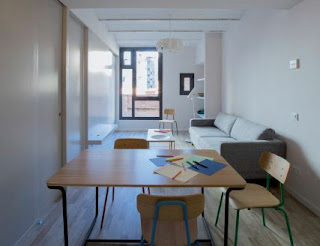
Nook Architects produce a home that is designed with regular-shaped spaces to make the most of a limited-width facade and which is easily duplicable without leading to a sense of boredom. They encourage end users to customize their home to their individual style and needs.  In this case, the kitchen, dining and living room are located in the wider area, creating a central nucleus to the home.


Saturday, April 16, 2016

The Benefits of Green Home


There are many benefits to living in a green home. In general, though, it will have a positive influence on three primary aspects of your life.

Your health: 
Foremost among the benefits of greening your home is that it’s good for your health.
Green homes rely on natural ventilation as well as mechanical ventilation systems that filter and bring
fresh air in and vent stale air out to keep indoor air clean. Good green homes also use toxin-free
materials and finishes or those with low toxicity to limit indoor air pollution, which can be more
harmful than pollution outdoors. Green homes are also designed to maximize natural light, which not
only boosts your mood, but is also vital to indoor plants, which are natural air detoxifiers. And some
green materials and home products resist mold and mildew or are antimicrobial, making for an all-around healthier indoor environment.

Your bank account: 
Living in a green house is also good for your pocketbook. Tax incentives or rebates and energy savings can make building a new green home or greening an existing home more cost-effective than building and living in a standard house. On a month-to-month basis, people who live in green homes save money by consuming less energy and less water than those who live in standard homes, which reduces their energy and utility bills.

Green homes are also often more durable than most standard homes, thanks to high-quality building materials and construction processes, which lead to lower maintenance costs and fewer repairs. Furthermore, the value of a green home is often higher than that of a comparable standard home, particularly because the market demand for green homes is on the rise.

Local, state and federal governments as well as utility companies have been offering tax breaks and
other incentives for building certified green homes or adding green features to your home, as long as
they meet accepted green guidelines. In the near future, green homes will likely cost less to insure
than standard homes, too.
Your planet:
Green homes are also easy on the environment and often use up to 40 percent less energy than similar standard homes. If you use drought-tolerant landscaping, efficient plumbing and bathing fixtures, and water-conservation systems, your home will also use less water than standard homes. Many green building materials are made with recycled content, which also minimizes impact on the environment. Salvaged materials from demolished buildings are also often used in green homes, as are materials made from rapidly renewable materials, such as bamboo, hemp and soybean-based products. In addition, the use of specially certified woods helps promote socially and environmentally beneficial forestry practices.


How to make your home greener
In general, the guidelines of these agencies and organizations aspire to make homes greener by doing the following:
• Minimizing environmental impact by wasting fewer resources during site preparation, construction
or renovation
• Recycling and conserving water and materials
• Reducing carbon buildup
• Using sustainable and nontoxic materials and finishes whenever possible
• Ensuring good indoor air quality
• Creating structures that are at least 15 percent more energy-efficient than those built with standard
construction practices

Friday, April 15, 2016

How to Start your Interior Design Business


Starting any business is never simple, but it doesn’t have to be as complicated as many people think. A lot of what is needed is actually fun. You have to understand that much of starting any business requires you to be a salesman. You have to build yourself and your company up.

You must get a business number and registration. You can check your government listings for the correct number. You must also check with your local accountant to see what needs to be done about taxes etc.
You must also decide if you are going to be a home business or if you are planning to run a studio for a lease. Make sure to purchase all of the necessary materials. Some items you can get for free if you know where to look. Here is a list of some of those materials.


What you will need
•  Color swatches for paints and fabrics ( you can get many of them for free from local paint stores if    you ask)
•  Fabric samples are a necessity (you can get them for free from your local furniture store)
•  Interior design magazines for client perusal (it helps them get an idea of what they like)
•  Furniture catalogues (free from furniture dealers and retailers)
•  Fine arts catalogue, get them from art galleries
•  Kitchen and bathroom catalogues. Basically get catalogues from everybody that deals with furniture, art, and lighting stores
•  Photos of your work, and signed recommendations (remember you get them from family and friends when you are just starting out)
•  Your portfolio (always have a copy of your portfolio)

What You Need to Know If You Want To Be An Interior Designer


This is just an idea of the things that you will be taught in accordance to your specialty. Interior design for a home is slightly different than commercial design. The needs for a home are quite different. Materials are different as well. When you chose a specialty, you will learn all of the basics in design, but also how to deal with, and get clients effectively. That is where things are quite different. You would not approach a company in the same manner that you might approach a homeowner. The ability to read and design blue prints

  1. Knowledge of color coordination and painting 
  2. Difference between furniture brands and styles 
  3. How to coordinate and organize a room to create a comfortable environment. 
  4. How to correctly estimate the length and size of materials needed 
  5. How to correctly estimate the amount of paints or wallpapers needed 
  6. How to maximize interior space to the room’s advantage. 
  7. How to communicate your ideas effectively to your client 
  8. Basic marketing skills are needed to further your business 
  9. How to correctly identify different types of furnishings, and to incorporate that knowledge into a legitimate design plan. 
  10. How to create an environmental plan because this is a practical, conducive and esthetic approach to your eventual goal of raising productivity, and selling your merchandise. 
  11. How to explain space planning, lighting, layout and color schemes to your clients. People often like to know why you are doing the things that you are doing. 
  12. How to arrange carpets, accessories, drapes and wall coverings. 
  13. Knowledge of fine arts, sculptures, music etc. These will often be included in your design changes and must incorporate properly into the area. (you would not want to hang a Picasso in a Victorian themed room)  


How To Be An Interior Designer?


When trying to decide if Interior Design is right for you, it helps to know what that really means. Interior Design is not simply the profession that “makes rooms and places pretty”; it takes a little bit more than that. You need to know how to do some of the technical aspects of design also. Some of these technical things include:

Designing and reading blueprints: This is particularly for the projects that require a great change in the area’s structure like wall removal etc. This is also required in order to make additional rooms, build gazebos, and adding extra rooms. You will need to draw up blueprints of the entire house or read the originals copies, so that you can do your job without causing much disturbance to the rest of the house or environment.

Environmental Analysis: Once you can read blueprints, you will have to analyze the information that is listed so that you can best decide where to go with your ideas. You need the ability to effectively create or remove space in a particular environment so that you can cause little or no disturbance the environment as a whole when making your changes.
 

Environmental Lighting: Many people forget that lighting is included in any space changing project. You must have knowledge of how lighting works, and have a general idea of what is needed to install light fixtures in areas that do not have them already. Many homes are not equipped with lighting fixtures in some rooms. Of course, if you wish to change the lighting fixtures from general lamps to say, track lighting, you may have a problem if you do not understand how to install it.

Basic Plumbing & pipe structure: If adding or changing spaces in kitchens and bathrooms, plumbing fixtures are often changed or re-organized. You will need to understand their basic functions in order to effectively plan a change that involves them, or is to be done around them.


Choosing Career As An Interior Designer


Have you ever seen a beautiful house or office building and wondered who did the work? Have you ever wished that you could do some of the work that you’ve seen elsewhere? Many people wonder what it would be like to be an Interior Designer, but they rarely ever go beyond thinking about it.

If you really want to know if Interior Design is right for, this article will be your comprehensive guide to the ins and outs of the business. In this article, you will learn what it takes to be an Interior Designer, what it costs to get certified, you will get all the techniques on how to get started, and much, much more.


An interior Designer is a consultant. You are there to beautify any particular environment as well as provide your clients with the service of explaining why you are recommending, and doing the things that your project will require. You must educate your client about interior design as well as design.
You have obviously given the idea of being an Interior Designer serious thought or you wouldn’t be reading this. Of course, like most people, you are probably wondering whether or not it is the right choice for you. I can guarantee you, that after you’ve read this, you will know for sure if Interior Design is the right career choice for your future.

Interior Design can be a very lucrative job choice for the right person. You might be wondering exactly what an Interior Designer does. It is really simple. An Interior Designer creates, organizes, and designs commercial and/or residential properties. Basically, an interior designer works with the
interior of a particular space, such as rooms, offices, boardrooms, and various other internal spaces.

Here is a list of some of the places that interior designers can work in.
•  Hotels                                            
•  Banks
•  Restaurants
•  Stadiums
•  Arenas
This doesn’t seem very broad, but think of all of the other types of homes and businesses that I didn’t mention. The possibilities are truly endless in this field. Interior Designers do more than just decorate a space. In some cases they can add extra rooms, design patios and gazebos, add or remove wall space, and they spend a great deal of time networking with people.

Interior Designers are responsible for creating a comfortable and relaxed space for their clients to live and/or work in. It is your duty to offer clients the best work that their needs, and budget can give. People put a great deal of trust in you, and you must reward that with the best final result possible.

Tuesday, March 22, 2016

Tips on Pacing Light Fixtures At Your Home


Even though light itself is immaterial, it profoundly affects our experience of space. While the light fixtures are important parts of the material style mix, the quality of the light they generate affects not only how a room functions, but more important, how it feels. It has the power to make or break a mood.

Lighting designers regard light as a medium, like an artist views paint, and they use it to shape our perception of space by highlighting architectural elements, creating focal points, subtly washing walls with gradations of illumination, or creating contrast with brightness and shadows. Richard Kelly, a celebrated 20th-century lighting designer who is widely recognized as one of the founders of the modern architectural lighting profession, produced the lighting schemes for houses and buildings
created by some of the most highly regarded architects of the 20th century, including Philip Johnson, Mies van der Rohe and Louis Kahn, among others. He used light to influence a person’s experience of architecture—its forms, materials, scale, proportion, color, decoration, even its sense of durability and stability. He also defined three elemental kinds of light effects that can be used to influence the perception of any space, and these definitions of light continue to guide lighting designers today. He described these qualities of light as focal glow, ambient luminescence, and the play of brilliants—and anyone can work with these qualities to create visually appealing illuminationLight fixtures are among the most sculptural and decorative elements you can add to your home. It ’s important to choose pieces that not only complement your decor, but are proportionate with the architecture and furnishings.

The following tips will help you select and position them most effectively:

Balance scales.
Even if lamps flanking a bed or sofa don’t match, choose fixtures that have similar visual weight.

Be mindful of size.
When suspending pendants or chandeliers over a table or kitchen island, be sure they are at least 9 or  10 inches smaller in diameter or width than the table or island so that no one bumps while leaning forward.

Gauge the distance.
If you have an 8-foot-high ceiling, suspend a pendant or chandelier so that the bottom of the fixture is positioned approximately 30 inches above the tabletop. Increase the height of the fixture 3 inches for every additional foot of ceiling height. Chandeliers and pendants also allow you to highlight the vertical access or center of a room.

Move outlets off the wall.
Install outlets in the floor if your furniture floats in the center of the room, to keep unsightly cords contained and prevent them from tripping someone.

Ensure clear vision.
Try to keep the bottom of the lampshade of a floor lamp at about eye level of a seated person to prevent glare.

Position sconces for easy passage.
If you illuminate a hall with sconces, mount them about 6 to 8 feet apart for even illumination and about 5 feet from the floor to keep light around eye level.

Sunday, March 20, 2016

Tips on Displaying Art And Collectibles At Home


While the furnishings in a room establish its style, art has the potential to express its soul. A colorful abstract piece can animate a serene room, a portrait can lend an air of formality, an atmospheric landscape can soothe. Given art’s transformative power, the placement of the art and its frame need to support its role as a visual and emotional focal point. Still, art, like furniture, is part of a larger context.

Collections of objects, such as wooden boxes, ceramic pots, wooden cutting boards, wire birdcages or butter molds—when carefully edited—can also be assembled into groups and presented like a work of art to transform a dead wall into a focal point. When choosing and placing art and collectibles for our own home, you can try these following tips from Jean Nayar on her book "The Happy Home Project".

Tips on displaying art and collectibles
Photographs gain stature and cohesion when surrounded with matching frames and hung as a collection.  Edit your collections with a judicious eye, eliminating all but the pieces you really love. Rotating new pieces in and old ones out will allow your objects to continue to stimulate you and be free of clichés.

Art and accessories needn’t come from the same era or be of similar style to work together, but they do need a common thread, such as a color, material or an idea. In this way, the objects will capture attention and tell a story about the collector.

A painting or print looks best when mounted so that the center of the piece is at eye level for an average-height person—about 66 inches from the floor. If you have several works of art mounted in this way, they’ll be linked by an invisible horizon line that will bring a sense of balance to the room.

Give small works stature by surrounding them with large mats. Or mount them in proportionate frames in a group where they can be viewed from close proximity.  Place a small painting on an easel on a table with other objects, or lean a midsize piece against the wall atop a mantel.

Consult a lighting professional about placement if you want to use recessed lighting to highlight art. Some fixtures need to be placed 30 inches away from the art and spaced 24 inches apart to evenly wash the painting with light and prevent the scallops that appear from the spread of the light beams. But lighting technology continues to evolve, so a standard like this is subject to change. Usually, the lighting you use to illuminate the room is sufficient to highlight the art, so you don’t necessarily need special lighting unless you want to call attention to the art. Just be sure to keep high-quality art out of the direct line of the sun.

Saturday, March 19, 2016

Tips On Furnishing Home Effectively


No room is complete without soft furnishings—sleek draperies, graceful window shades, pretty cushions, cozy throws, luscious bed linens. Not only do fabric elements add beauty, color, warmth, softness and personality to a room, they’re incredibly practical, too.

Think of soft furnishings as the grace notes that balance the hard surfaces and angles in a room and address the finer points of comfort. Curtains can bring in softness and color while providing privacy and controlling harsh sunlight, for example. A slipcover, on the other hand, can transition a more formal upholstered chair from winter to spring while extending the life of the upholstery and protecting it from stains at the same time. And, as seasons and styles change, soft furnishings, such as pillows, throws, napkins and table linens, are among the easiest pieces to switch out to freshen up a room cost-effectively.

Defining goals 
Given the countless colors, patterns and textures of decorative fabrics from which soft furnishings are made—as well as the endless ways in which fabrics can be shaped into wonderful forms—it helps to return to your stylistic frame of reference to guide your choices in both the fabrics and the style of your soft furnishings themselves. If you’re developing a traditional-style setting, for example, you might choose floor-length draperies topped with a pleated valance to frame a window. If a modern
scheme is what you’re after, then you might opt for crisp Roman shades.

Once you hone in on the look you’re after, consider the functional goals for your soft furnishings, too, as well as what you’re willing to spend to create them. Custom curtains can cost a bundle, but they can also last 25 years or more, meaning you’ll amortize their cost over time if you plan to stay in your home for the long haul. Decorative pillows on the other hand can be purchased for next to nothing, and can readily be replaced for an instant style update while keeping your budget in check.

Tips on using fabric effectively 
Before investing in soft furnishings for your home, consider these tips for making stylish and savvy choices.

Keep upholstered pieces simple. 
Especially in public rooms, the fabrics on large upholstered items should be easy on the eye, and preferably in a solid color. It ’s easier to switch out a printed pillow when you tire of it than to start over with a new chair fabric. Solid blocks of color on furnishings will also make a room feel more serene, and will provide a solid base that you can change simply with accents, pillows, rugs and art.

Consider your lifestyle. 
If you’ve got a large family, young children or pets, know that your upholstered pieces will endure a fair share of wear and tear, so be sure the fabric you choose is durable and dirt-resistant, too. Opt for textured fabrics such as tweeds or chenilles, or look for a high- performance fabric, such as a synthetic ultra-suede, that ’s durable and stain-resistant, too. If you’re a low-maintenance empty nester, you might go for silk or velvet.

Expand your options. 
If you want a seasonal change of scene, consider slipcovers. They can be Use pattern sparingly. Even if you love pattern, limiting it to smaller doses will help keep a room
feeling serene. Employ it on small side chairs, pillows or ottomans for best effect. Patterned rugs are
also great, as they conceal footprints and dirt.

Choose curtain fabric with care.
Curtains bring softness and drama to bare windows, but patterns sometimes lose their impact when lost in folds of fabric, so prefer solids and neutrals for curtains and shades. If you do choose a patterned fabric for a window treatment, however, consider the scale of the pattern in relation to the scale of the windows and other patterned elements in the room.

Be mindful of curtain headers and hems. 
If, for example, you’re creating custom curtains in a traditional home, you might choose softer goblet pleats, butterfly pleats or fan pleats; for a modern home you might opt for clean panels topped with crisp pinch pleats, X pleats or grommets. For very soft romantic headers, a variety of header tapes can be employed to create gathered, shirred or smocked designs. For more casual rooms, consider panels topped with tabs, ties or clip-on rings. Pocket-style headers always result in soft or romantic curtains.
 
Another key to stylish curtains is their length. 
Ideally, they should break at the floor an inch or two, like well-made gentleman’s trousers, for an elegant drape. However, many people prefer curtains that stop just short of the floor for ease of cleaning, which is also fine. Short curtains should be hemmed just above the windowsill.

Vary the scale of patterns. 
Including fabrics in a mix of large-, medium- and small-scale patterns will also keep the overall picture balanced. Also, remember that the style and scale of the pattern should relate not only to the style of the piece of furniture but also to its size and proportions.

Add a personal touch. 
Give extra polish to pillows you make yourself or inj ect a ready-made pillow with a custom touch by embellishing a pillow cover with trims and embellishments. Piping or welting provides a classic finish to the seams of all kinds of cushions, from a basic toss pillow to an extravagant neck roll. Other options for edging cushions are narrow flanges and brush fringe.

Choose fabrics in soothing hues for bedrooms. 
Fabrics with limited patterns and soft hands will also contribute a serene and comforting ambience.

Friday, March 18, 2016

Expert Tips on Working with Color


Have you decided the color of your home? Well, before you work with color for your home, let's check these tips out from the experts :

• Rely on a reference for cues. 
A vintage Oriental rug served as the starting point for all of the colors of the upholstery, cushions, and even the art in our living room. When choosing between the dominant and accent colors for the palette, I remembered a tip given to me by New York–based designer Jamie Drake, who suggested using the least prevalent color in the rug as the dominant color on the walls. A curtain fabric, decorative bowl or work of art are also viable starting points for a color palette.

• Consider the context. 
The geographical location of your home and the prevailing colors in the
landscape or other buildings are also good starting points for color choices. In our apartment in India,
for example, we’ve painted one wall in a bedroom a deep pink hue, which looks beautiful in the strong sun. In most parts of the U.S., on the other hand, super-bright colors look out of place.


• Establish balance. 
When mixing colors, artists may use completely different hues, but the
saturation or intensity of the colors is often similar.

• Create a harmonious composition. 
When using two colors in a palette, let one dominateby
employing it through 70 to 80 percent of the scheme and use the other in 20 to 30 percent of the
scheme.

• Rely on cultural associations. 
Use colors that resonate with cultural associations that are meaningful to you, suggests Sonu Mathew, a color expert and spokeswoman for Benj amin Moore, who notes that most Americans respond positively to shades of red, white and blue. She also says that social media is creating a new platform for color associations. “You can now go to the top of Mount Kilamanjaro through the Internet without leaving your chair,” she says. “This phenomenon is creatingn new communities with different color associations around the world.”

Tips on Choosing Color and Pattern for Your Room


The colors in a room are as essential to its style as the architectural elements, furnishings and fabrics. Selecting colors for your home can be one of the most exciting parts of the decorating process. It can also be one of the most intimidating. While most of us know instinctively which colors we like and which we don’t, choosing just the right shade of any given hue and mixing it with other colors in a room can be overwhelming, as the options are virtually limitless.

To take the stress out of selecting a wall color, paint companies often come up with cohesive palette collections to help consumers choose colors without fear. These color groupings often include contrasting or complementary colors that harmonize in tone and value—and they can be enormously helpful in minimizing the time you’ll need to spend testing different shades on a wall. That said, following a prescriptive approach to color keeps you from creating personal spaces that truly reflect your own tastes and values. It’s important to trust your instincts. There’s a reason why you like what you like—and surrounding yourself with hues that please you will put you at ease.

While choosing colors that inspire you is essential to creating a room that makes you happy, artfully mixing different colors is equally important. A lot of elements—chairs, rugs, art, walls, accents, pillows—compete for attention in a room. Using too many colors or colors that don’t harmonize will make a room feel unsettled.

helpful rules of thumb

1. Keep color under control. 
To create serene spaces, one helpful rule of thumb is to limit the number of colors in a room to three or four, with two of the colors in a palette serving as accents. Softer neutrals on walls result in more soothing rooms, introduce color with rugs, art and accents like pillows and lamps. Still, painting your walls is a great way to experiment with color. You can minimize your risk and your expense by painting a single wall a bolder, brighter or richer color. Similarly, you can paint the inside of a closet or bookshelf a stronger hue to work in color that can easily be changed with minimal expense and disruption if you tire of it or decide you don’t like it.

2. Use strong color in small doses. 
Whether you’re adding color with paint, fabric, accents or art, complex colors, such as brick red, slate blue, pear green, or ochre, are easier on the eye than bold hues or primary or secondary colors, which are better deployed in small doses (or in bright, sunny locations).

3. Limit contrast. 
Another helpful tip to create harmonious color schemes is to use colors that are adjacent to each other on the color wheel. They keep a room cohesive by minimizing contrast. You can mix lighter and darker shades of similar hues to keep things interesting. And be sure to sprinkle accents around the room, rather than group them in one place, to keep the eye moving and the scheme balanced.

4. Use shots of pattern. 
A final key to creating a pleasing palette is to use mostly solid blocks of color and limit pattern to smaller furnishings, accents or art. To create a soothing flow from room to room, keep the palette consistent throughout. You might switch the dominant hue from one room to the next for variety, but sticking to a unified palette in spaces that visually connect will keep them from feeling disjointed.

Recent Posts

Powered by Blogger.

Recent Posts